

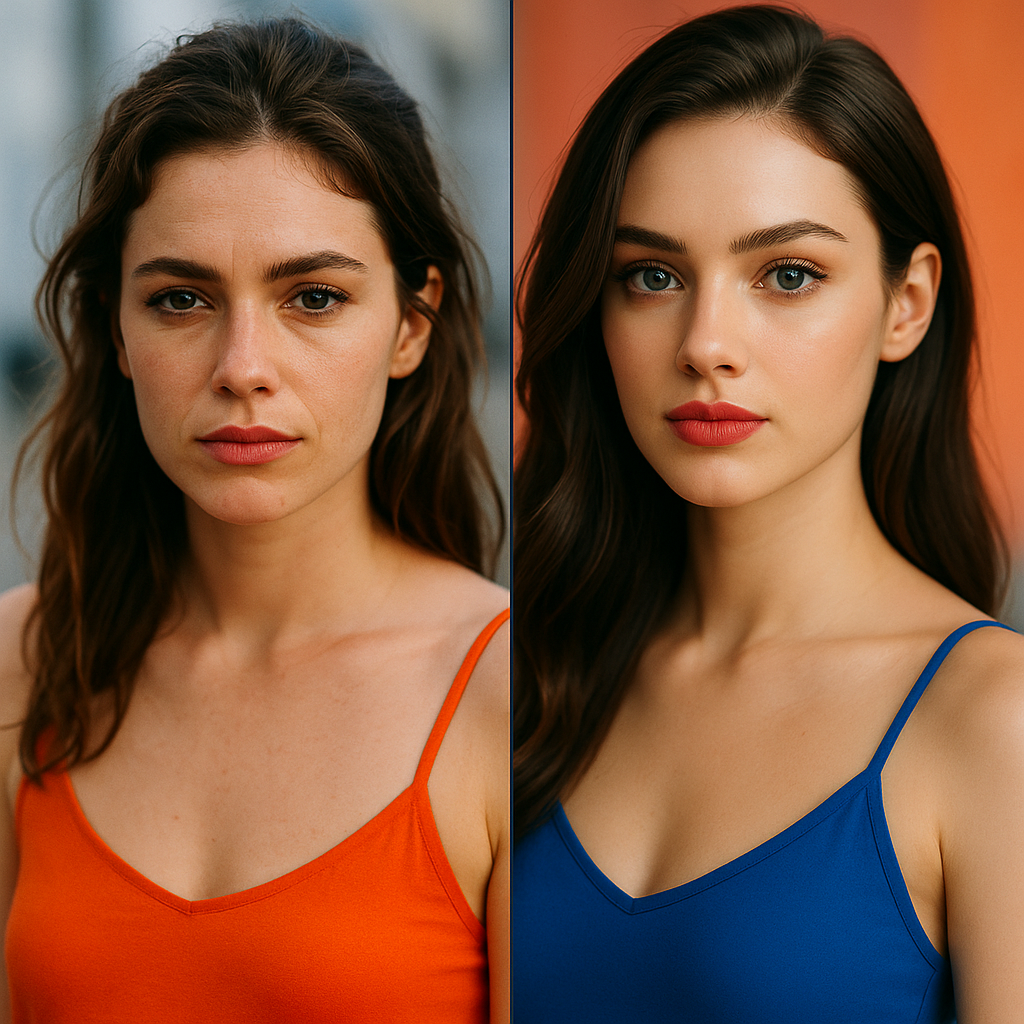
Real-Life Model Photography vs AI Photography: How the Landscape Is Changing
AI photography is one of the most disruptive forces to hit the visual content industry in decades. Brands, agencies, and independent creators who once relied entirely on studios, professional photographers, and human models are now weighing a genuinely transformative alternative: synthetically generated imagery that can produce campaign-ready visuals in hours rather than weeks. Whether you work in fashion photography, e-commerce, or broader product photography, understanding this shift is no longer optional — it is essential for staying competitive in 2024 and beyond. This guide breaks down exactly what has changed, what the numbers say, and what creative professionals need to know right now.
For a deeper understanding of how generated content fits into broader digital strategy, see our guide on what AI-generated content is and how it works. Brands managing large product catalogues may also benefit from our analysis of how to reduce e-commerce content production costs without sacrificing visual quality.

The Traditional Model Photography Workflow: Strengths and Limitations
Traditional model photography has been the backbone of fashion photography and product photography for over a century. The workflow is well-established: a brand briefs a creative director, scouts locations or books studios, casts human models through agencies, coordinates hair and makeup artists, and then shoots over one or more days before sending files through post-production retouching and colour grading. The result is imagery with authentic human presence, tactile fabric detail, and the kind of emotional resonance that has historically driven consumer purchase intent.
What Traditional Shoots Deliver That AI Cannot Easily Replicate
The strengths of real-life model photography are significant and worth cataloguing clearly:
- Authentic emotional expression: Human models convey micro-expressions and body language that AI-generated figures still struggle to reproduce convincingly at scale.
- Physical fabric interaction: The way a garment drapes, stretches, or creases on a real body provides genuine product information to the consumer — information that AI photography may misrepresent.
- Consumer trust: A 2023 Nielsen study found that 61% of consumers trusted advertising imagery featuring real people more than AI-generated equivalents.
- Brand narrative depth: Luxury fashion houses such as Chanel, Burberry, and Valentino use human models not just to show products but to tell stories that reinforce brand heritage and aspiration.
The Real Costs of a Traditional Fashion Shoot
Despite its creative strengths, traditional model photography carries substantial financial and logistical overhead. A mid-tier editorial fashion shoot in the UK typically involves the following costs:
- Model fees: £500–£5,000 per day depending on agency and experience level
- Photographer day rate: £1,500–£8,000
- Studio hire: £800–£3,000 per day
- Hair, makeup, and styling: £600–£2,500
- Post-production retouching: £50–£300 per final image
When aggregated across a full campaign — including location fees, production managers, and licensing costs — a comprehensive traditional shoot can total between £15,000 and £80,000. For fast-fashion retailers producing thousands of product images each season, this represents a significant and recurring capital allocation.
To explore how leading retailers are rethinking these budgets, read our detailed breakdown of fashion photography production costs in 2024.
What Is AI Photography and How Does It Actually Work?
AI photography encompasses a range of technologies — from generative image models to AI-enhanced editing suites — that enable brands to create photorealistic visual content without a traditional camera shoot. Understanding the mechanics is essential for any creative professional evaluating whether and how to adopt these tools.
Key AI Photography Technologies in Commercial Use
Several distinct technology categories fall under the umbrella of AI photography:
- Text-to-image generation: Tools like Midjourney, DALL·E 3, and Stable Diffusion allow users to input a text prompt and receive a photorealistic image output within seconds.
- Virtual try-on and model generation: Platforms such as Lalaland.ai and Fashn.ai are specifically built for fashion — enabling brands to place garments on diverse AI-generated human figures.
- AI-enhanced editing: Adobe Firefly and similar tools integrate generative fill and background replacement into existing photography workflows, augmenting rather than replacing traditional shoots.
- Automated product photography: Systems like Packshot Creator and Amazon’s AI scene generation tools automate background creation, lighting simulation, and shadow generation for product imagery at scale.

The AI Photography Production Process Step by Step
For brands new to AI photography, the production workflow differs substantially from traditional shoots:
- Brief and prompt engineering: Creative directors translate campaign concepts into detailed text prompts or reference image uploads.
- Model and scene generation: The AI system generates base images — human figures, backgrounds, lighting scenarios — within minutes.
- Product integration: Where required, actual product imagery is composited onto AI-generated figures using virtual try-on technology or manual compositing.
- Quality review and iteration: Teams review outputs, refine prompts, and regenerate as needed — a cycle that can run multiple times within a single working day.
- Post-processing: Final images receive colour grading, brand-aligned adjustments, and format exports for digital and print channels.
This condensed workflow is one of the defining advantages of AI photography — dramatically compressing timelines that would traditionally span weeks into a process measured in days or hours.
Cost Comparison: AI Photography vs Traditional Model Photography
Cost is consistently cited as the primary driver behind brand adoption of AI photography. The financial differential between the two approaches is substantial and deserves granular examination.
AI photography platforms typically operate on one of three commercial models: per-image pricing (commonly £1–£10 per final image), monthly subscription tiers (ranging from £50 to £500 per month for commercial licences), or enterprise contracts for large-scale deployments. Even at the upper end of per-image pricing, the cost differential compared to traditional model photography is dramatic.
Consider a practical example: a fast-fashion retailer producing 500 product images per season. Using traditional model photography at an average fully-loaded cost of £120 per image (inclusive of model, photographer, studio, and post-production), total spend reaches £60,000. Using an AI photography platform at £5 per image, the same output costs £2,500 — a saving of £57,500, or 95.8% of the original budget.
Where AI Photography Delivers the Strongest ROI
Not every use case produces equally strong returns. AI photography delivers the most measurable ROI in the following scenarios:
- High-volume e-commerce catalogues: Retailers with thousands of SKUs benefit most from the speed and per-unit cost reduction of AI photography.
- Rapid iteration and A/B testing: Digital marketing teams can generate multiple visual variants of the same product for multivariate testing without additional shoot costs.
- Localisation and personalisation: AI photography enables brands to quickly adapt imagery for different markets — adjusting model appearance, background, or styling — at negligible marginal cost.
- Seasonal refresh cycles: Rather than reshooting a full catalogue each season, brands can use AI photography to update backgrounds, lighting mood, or model presentation while retaining core product imagery.
For practical guidance on implementing AI tools within an e-commerce photography strategy, see our article on e-commerce product photography best practices.
Quality and Creative Output: Where Each Approach Excels
Cost efficiency alone does not determine the right approach. Creative quality — including image authenticity, brand alignment, and consumer emotional response — must be weighed carefully when evaluating AI photography against traditional alternatives.