
Real-Life Model Photography vs AI Photography: How the Landscape Is Changing
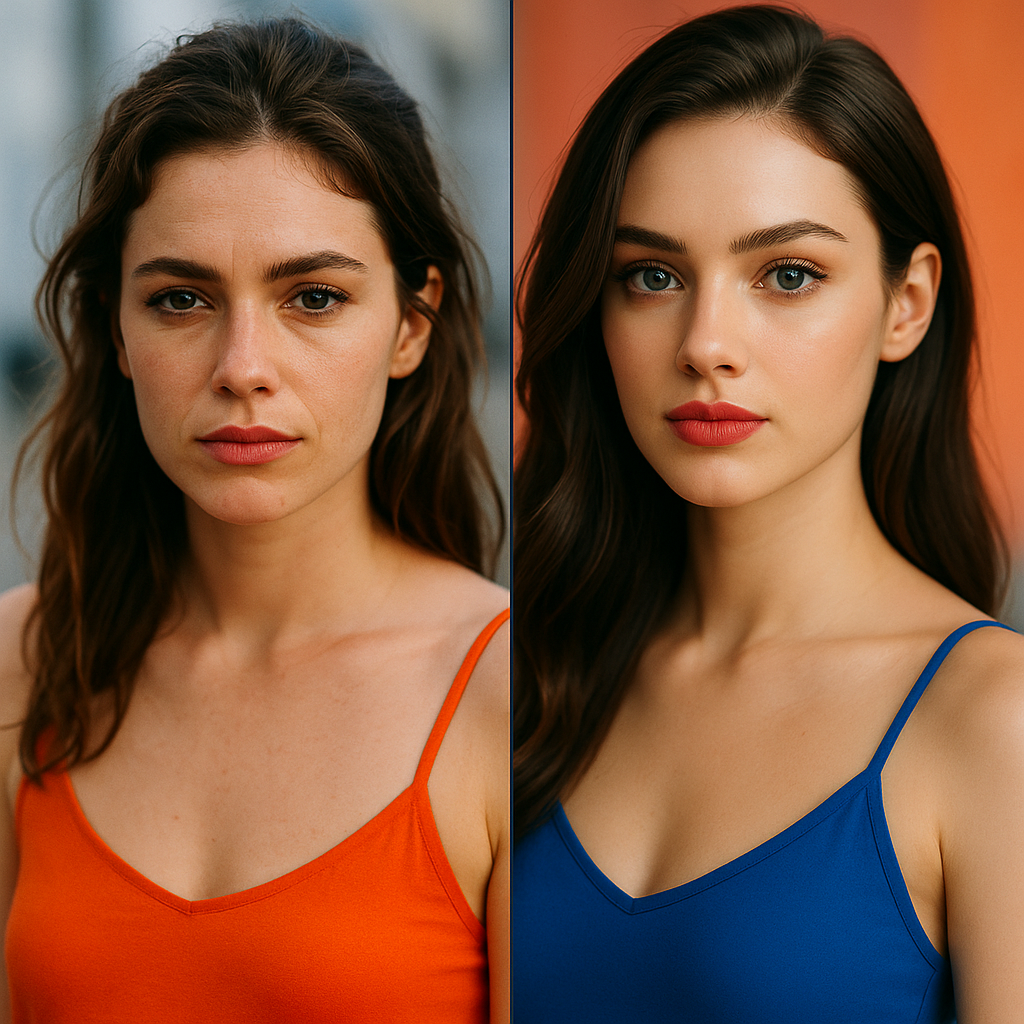
AI photography is one of the most disruptive forces to hit the visual content industry in decades. Brands, agencies, and independent creators who once relied entirely on studios, professional photographers, and human models are now weighing a genuinely transformative alternative: synthetically generated imagery that can produce campaign-ready visuals in hours rather than weeks. Whether you work in fashion photography, e-commerce, or broader product photography, understanding this shift is no longer optional — it is essential for staying competitive in 2024 and beyond. This guide breaks down exactly what has changed, what the numbers say, and what creative professionals need to know right now.
For a deeper understanding of how generated content fits into broader digital strategy, see our guide on what AI-generated content is and how it works. Brands managing large product catalogues may also benefit from our analysis of how to reduce e-commerce content production costs without sacrificing visual quality.

The Traditional Model Photography Workflow: Strengths and Limitations
Traditional model photography has been the backbone of fashion photography and product photography for over a century. The workflow is well-established: a brand briefs a creative director, scouts locations or books studios, casts human models through agencies, coordinates hair and makeup artists, and then shoots over one or more days before sending files through post-production retouching and colour grading. The result is imagery with authentic human presence, tactile fabric detail, and the kind of emotional resonance that has historically driven consumer purchase intent.
What Traditional Shoots Deliver That AI Cannot Easily Replicate
The strengths of real-life model photography are significant and worth cataloguing clearly:
- Authentic emotional expression: Human models convey micro-expressions and body language that AI-generated figures still struggle to reproduce convincingly at scale.
- Physical fabric interaction: The way a garment drapes, stretches, or creases on a real body provides genuine product information to the consumer — information that AI photography may misrepresent.
- Consumer trust: A 2023 Nielsen study found that 61% of consumers trusted advertising imagery featuring real people more than AI-generated equivalents.
- Brand narrative depth: Luxury fashion houses such as Chanel, Burberry, and Valentino use human models not just to show products but to tell stories that reinforce brand heritage and aspiration.
The Real Costs of a Traditional Fashion Shoot
Despite its creative strengths, traditional model photography carries substantial financial and logistical overhead. A mid-tier editorial fashion shoot in the UK typically involves the following costs:
- Model fees: £500–£5,000 per day depending on agency and experience level
- Photographer day rate: £1,500–£8,000
- Studio hire: £800–£3,000 per day
- Hair, makeup, and styling: £600–£2,500
- Post-production retouching: £50–£300 per final image
When aggregated across a full campaign — including location fees, production managers, and licensing costs — a comprehensive traditional shoot can total between £15,000 and £80,000. For fast-fashion retailers producing thousands of product images each season, this represents a significant and recurring capital allocation.
To explore how leading retailers are rethinking these budgets, read our detailed breakdown of fashion photography production costs in 2024.
What Is AI Photography and How Does It Actually Work?
AI photography encompasses a range of technologies — from generative image models to AI-enhanced editing suites — that enable brands to create photorealistic visual content without a traditional camera shoot. Understanding the mechanics is essential for any creative professional evaluating whether and how to adopt these tools.
Key AI Photography Technologies in Commercial Use
Several distinct technology categories fall under the umbrella of AI photography:
- Text-to-image generation: Tools like Midjourney, DALL·E 3, and Stable Diffusion allow users to input a text prompt and receive a photorealistic image output within seconds.
- Virtual try-on and model generation: Platforms such as Lalaland.ai and Fashn.ai are specifically built for fashion — enabling brands to place garments on diverse AI-generated human figures.
- AI-enhanced editing: Adobe Firefly and similar tools integrate generative fill and background replacement into existing photography workflows, augmenting rather than replacing traditional shoots.
- Automated product photography: Systems like Packshot Creator and Amazon’s AI scene generation tools automate background creation, lighting simulation, and shadow generation for product imagery at scale.

The AI Photography Production Process Step by Step
For brands new to AI photography, the production workflow differs substantially from traditional shoots:
- Brief and prompt engineering: Creative directors translate campaign concepts into detailed text prompts or reference image uploads.
- Model and scene generation: The AI system generates base images — human figures, backgrounds, lighting scenarios — within minutes.
- Product integration: Where required, actual product imagery is composited onto AI-generated figures using virtual try-on technology or manual compositing.
- Quality review and iteration: Teams review outputs, refine prompts, and regenerate as needed — a cycle that can run multiple times within a single working day.
- Post-processing: Final images receive colour grading, brand-aligned adjustments, and format exports for digital and print channels.
This condensed workflow is one of the defining advantages of AI photography — dramatically compressing timelines that would traditionally span weeks into a process measured in days or hours.
Cost Comparison: AI Photography vs Traditional Model Photography
Cost is consistently cited as the primary driver behind brand adoption of AI photography. The financial differential between the two approaches is substantial and deserves granular examination.
AI photography platforms typically operate on one of three commercial models: per-image pricing (commonly £1–£10 per final image), monthly subscription tiers (ranging from £50 to £500 per month for commercial licences), or enterprise contracts for large-scale deployments. Even at the upper end of per-image pricing, the cost differential compared to traditional model photography is dramatic.
Consider a practical example: a fast-fashion retailer producing 500 product images per season. Using traditional model photography at an average fully-loaded cost of £120 per image (inclusive of model, photographer, studio, and post-production), total spend reaches £60,000. Using an AI photography platform at £5 per image, the same output costs £2,500 — a saving of £57,500, or 95.8% of the original budget.
Where AI Photography Delivers the Strongest ROI
Not every use case produces equally strong returns. AI photography delivers the most measurable ROI in the following scenarios:
- High-volume e-commerce catalogues: Retailers with thousands of SKUs benefit most from the speed and per-unit cost reduction of AI photography.
- Rapid iteration and A/B testing: Digital marketing teams can generate multiple visual variants of the same product for multivariate testing without additional shoot costs.
- Localisation and personalisation: AI photography enables brands to quickly adapt imagery for different markets — adjusting model appearance, background, or styling — at negligible marginal cost.
- Seasonal refresh cycles: Rather than reshooting a full catalogue each season, brands can use AI photography to update backgrounds, lighting mood, or model presentation while retaining core product imagery.
For practical guidance on implementing AI tools within an e-commerce photography strategy, see our article on e-commerce product photography best practices.
Quality and Creative Output: Where Each Approach Excels
Cost efficiency alone does not determine the right approach. Creative quality — including image authenticity, brand alignment, and consumer emotional response — must be weighed carefully when evaluating AI photography against traditional alternatives.

AI Photography Strengths in Creative Output
- Consistency at scale: AI photography produces consistent lighting, colour temperature, and compositional style across hundreds or thousands of images — something human teams find difficult to maintain across multiple shoot days.
- Speed of creative iteration: Art directors can explore dozens of visual directions within a single session, enabling more creative experimentation than a traditional shoot schedule typically permits.
- Diversity on demand: AI photography platforms can generate models representing a wide range of ethnicities, body types, ages, and presentations without the logistical and financial burden of casting diverse talent.
- 24/7 production capability: Unlike traditional shoots constrained by crew availability and studio booking, AI photography workflows can run continuously, enabling global teams across time zones to iterate without delay.
Where Traditional Photography Still Leads on Quality
- Tactile product truth: High-resolution traditional photography captures genuine material qualities — leather grain, knitwear texture, embroidery detail — that AI photography may render inaccurately or inconsistently.
- Authentic human connection: Consumer research consistently shows that real human presence in advertising imagery drives higher emotional engagement and purchase intent in aspirational categories.
- Unexpected creative discovery: The best traditional photography often produces unplanned moments — a model’s spontaneous gesture, unexpected natural light — that elevate imagery beyond what was scripted. AI photography, by its nature, optimises toward expected outputs.
Ethical Considerations: The Questions AI Photography Raises
The rapid rise of AI photography has generated a significant body of ethical debate across the creative industries. These are not peripheral concerns — they represent genuine questions about labour, representation, transparency, and intellectual property that brands and agencies must actively address.
Displacement of Creative Professionals
The most immediate ethical concern is workforce displacement. The British modelling industry employs an estimated 80,000 professionals directly or indirectly, including models, photographers, stylists, makeup artists, and production coordinators. If AI photography captures even 20% of the commercial photography market — a conservative estimate given current adoption trajectories — the downstream employment impact is substantial.
Industry body Equity UK, which represents performers and models, published guidance in 2023 calling for transparency requirements, consent frameworks for likeness usage, and minimum compensation standards for AI-generated model imagery that incorporates real individuals’ likenesses. These are live regulatory debates that will shape the commercial landscape for AI photography in the coming years.
Representation and Bias in AI-Generated Imagery
AI photography systems are trained on existing image datasets, which reflect the historical biases of commercial photography — including underrepresentation of certain ethnicities, body types, ages, and disabilities. If brands use AI photography without critically reviewing outputs for representation, they risk perpetuating or even amplifying these biases at scale.
Research published by the MIT Media Lab found that several leading image generation models showed statistically significant racial and gender skewing in default outputs — producing lighter-skinned, narrowly proportioned figures as default representations of concepts like “model” or “fashion.” Brands adopting AI photography must implement explicit diversity requirements in their prompt engineering and output review processes.
Consumer Transparency and Labelling
A growing number of consumer advocacy groups and regulators are calling for mandatory disclosure when commercial imagery is AI-generated. The UK’s Advertising Standards Authority (ASA) has begun monitoring AI-generated advertising content, and the EU AI Act — which came into force in 2024 — includes provisions requiring transparency labels on synthetic media used in commercial communications.
Brands that adopt AI photography without disclosure policies not only face regulatory risk but also potential consumer trust damage if synthetic imagery is exposed without context. Proactive transparency — clearly labelling AI-generated imagery where it appears — is both an ethical imperative and a strategic risk management measure.
Brand Case Studies: Who Is Using AI Photography and How
Examining how leading brands have approached AI photography in practice provides the clearest picture of where the technology currently delivers value — and where its limitations are still felt.
Levi’s and Lalaland.ai: The Pilot That Sparked Debate
In March 2023, Levi Strauss & Co. announced a partnership with AI model platform Lalaland.ai to supplement its product photography with AI-generated models representing a wider range of body types and skin tones than its existing catalogue featured. The announcement generated significant media attention and a sharp backlash from model unions and diversity advocates who argued that the brand should hire diverse human models rather than simulate diversity through AI photography.
Levi’s subsequently clarified that AI-generated imagery would supplement rather than replace human model photography, and that the initiative was intended to expand size and diversity representation in the short term while longer-term casting processes were updated. The case illustrates both the genuine utility and the reputational risk of AI photography adoption when communication strategy is not carefully managed.
Amazon: AI Photography at Marketplace Scale
Amazon launched its AI image generation tool for marketplace sellers in late 2023, enabling third-party vendors to automatically generate lifestyle backgrounds for product images — transforming plain white-background product shots into contextualised scene imagery without additional photography. The tool represents AI photography applied at unprecedented scale: Amazon’s marketplace hosts over 350 million product listings, a volume that no traditional photography operation could service cost-effectively.
ASOS: Automated Product Photography in Practice
ASOS has deployed automated photography and AI-assisted processing across portions of its product catalogue, using technology to accelerate the shoot-to-publish pipeline. With over 85,000 active product lines, ASOS faces a content production challenge of a scale that makes AI photography operationally essential rather than merely advantageous.
Luxury Brands: The Holdouts and Why
In contrast, luxury fashion houses including Chanel, Louis Vuitton, and Bottega Veneta continue to invest heavily in traditional model photography for hero campaign imagery. For these brands, the craft and authenticity of real photography are inseparable from their brand value proposition. A campaign image is not merely a product shot — it is a statement of artistic intent and cultural positioning. For this segment of the market, AI photography remains a peripheral tool for operational content rather than a candidate for creative flagship campaigns.
AI Photography and SEO: What E-Commerce Teams Need to Know
For digital marketers and e-commerce managers, the implications of AI photography extend beyond visual quality into search performance. How AI-generated images are produced, optimised, and deployed materially affects organic visibility, page experience metrics, and conversion rate.
Speed to Market and Crawl Efficiency
One of the underappreciated SEO advantages of AI photography is its impact on time-to-publish. Traditional photography pipelines — from shoot to retouching to web upload — routinely take two to six weeks. AI photography can compress this to 24–48 hours, enabling products to be indexed and ranked sooner in their commercial lifecycle. For seasonal and trend-driven retail categories, earlier indexation directly correlates with higher organic revenue capture during peak demand windows.
Image Optimisation Requirements for AI-Generated Content
AI photography outputs require the same technical optimisation as traditionally produced images — and in some cases more rigorous attention, given that AI-generated images may carry metadata that reveals their synthetic origin to search engine crawlers. Best practices include:
- Descriptive alt text: Every AI-generated image should carry keyword-rich, genuinely descriptive alt text that serves both accessibility and search indexation purposes.
- Compressed file formats: Use WebP or AVIF format for AI photography outputs to minimise file size without quality loss — a Core Web Vitals consideration.
- Structured data markup: Use
ImageObjectschema to provide search engines with explicit context about image content, creator, and licence terms. - Unique image generation: Avoid using identical AI photography outputs across multiple product pages, as duplicate imagery may dilute search visibility at the page level.
For a comprehensive checklist of image SEO requirements, including structured data templates for AI-generated content, see our guide on image SEO optimisation for e-commerce.
Conversion Rate Implications of AI-Generated Model Imagery
The conversion rate impact of switching from traditional to AI photography is product-category dependent. Research from Baymard Institute indicates that product images showing garments on a human figure — real or AI-generated — outperform flat-lay or ghost-mannequin images by 20–35% in apparel categories. This finding supports AI photography adoption as a viable conversion optimisation strategy even where traditional photography is impractical at scale.
However, the same research notes that image resolution, authenticity of fabric rendering, and model pose naturalness all influence consumer confidence and return rates. Brands should A/B test AI photography outputs against traditional imagery at the product page level before committing to full-catalogue transitions.
The Hybrid Model: Where AI Photography and Human Talent Coexist
The most strategically sophisticated brands are not choosing exclusively between AI photography and traditional model photography — they are developing hybrid workflows that leverage the strengths of both approaches according to content tier and use case.

Content Tier Mapping for Hybrid Workflows
A practical framework for hybrid AI photography strategy maps content types to production method by volume, visibility, and brand sensitivity:
- Tier 1 — Hero campaigns: Traditional model photography. High investment, high brand visibility, emotional storytelling priority. Reserved for seasonal launches, flagship products, and brand-defining creative.
- Tier 2 — Look-book and editorial: Mixed approach. AI photography used for secondary colourways and size variants; human model photography retained for lead looks and editorial features.
- Tier 3 — E-commerce catalogue: Predominantly AI photography. High volume, standardised presentation, optimised for conversion rather than brand storytelling.
- Tier 4 — Social and paid media variants: AI photography for rapid creative testing and localisation variants, with human photography anchoring the core creative.
Technology Stack for Hybrid AI Photography Workflows
Brands building hybrid production infrastructure typically integrate the following tools:
- Adobe Creative Cloud with Firefly integration for AI-enhanced retouching and background generation within existing photography workflows
- Lalaland.ai or Fashn.ai for virtual try-on and AI model generation for apparel catalogues
- Midjourney or DALL·E 3 for concept development, mood-boarding, and background scene generation
- Digital Asset Management (DAM) systems with AI tagging and metadata generation to manage the increased output volume that AI photography enables
The Future of AI Photography: What the Data Projects
Forward-looking analysis of AI photography adoption draws on a convergence of technology capability forecasts, market sizing data, and brand investment signals. The picture that emerges is one of accelerating adoption tempered by persistent human creative value.
Gartner projects that by 2025, 30% of outbound marketing images from large organisations will be synthetically generated. McKinsey & Company‘s 2023 generative AI report estimates that AI tools could automate 20–30% of marketing content production tasks currently performed by human creatives within three to five years. The global AI image generation market, valued at $299 million in 2023, is projected by Grand View Research to reach $917 million by 2030 — a compound annual growth rate of 17.4%.
Regulatory Developments That Will Shape AI Photography
The regulatory environment surrounding AI photography is evolving rapidly. Key developments to monitor include:
- EU AI Act (2024): Mandates transparency labelling for synthetic media in commercial communications and establishes liability frameworks for AI-generated content used in advertising.
- UK Government AI Regulation White Paper: Sets out a principles-based approach to AI oversight, with sector-specific guidance expected for creative industries in 2025.
- US Copyright Office AI Guidance (2023): Established that AI-generated images without meaningful human creative input are not eligible for copyright protection — a determination with significant implications for brand IP strategy around AI photography assets.
- Advertising Standards Authority monitoring: The ASA has confirmed it is actively reviewing cases involving AI-generated advertising imagery and will apply existing CAP Code standards on misleading advertising to synthetic content.
Frequently Asked Questions About AI Photography
What is AI photography?
AI photography refers to the use of artificial intelligence platforms — including generative models like Midjourney, Adobe Firefly, and Stable Diffusion — to create, edit, or enhance photorealistic images without a traditional camera shoot. In commercial contexts, AI photography is used to produce human model imagery, product visuals, lifestyle scenes, and complete campaign assets synthetically.
Is AI photography cheaper than hiring a real model?
Yes, significantly. A traditional mid-tier UK fashion shoot costs between £15,000 and £80,000 in total. AI photography platforms reduce per-image costs to as little as £1–£10, delivering savings of up to 90% on production spend for equivalent output volumes.
Can AI photography replace human models entirely?
Not entirely, and not yet. AI photography excels at scale, speed, and cost efficiency — particularly for e-commerce catalogue imagery. However, human models retain clear advantages in emotional nuance, luxury brand storytelling, and consumer trust. A 2023 Nielsen study found 61% of consumers trusted advertising featuring real people more than AI-generated equivalents.
What are the ethical concerns with AI photography in fashion?
The primary ethical concerns include workforce displacement of models and photographers, representation biases embedded in AI training data, lack of consumer transparency about synthetic imagery, and unresolved intellectual property questions regarding AI-generated likenesses. Industry bodies including Equity UK and regulatory authorities including the ASA are actively developing frameworks to address these issues.
Which brands are currently using AI photography?
Levi’s trialled AI-generated models via Lalaland.ai in 2023. Amazon launched AI background generation for marketplace sellers. ASOS uses automated photography systems for catalogue production. In contrast, luxury brands including Chanel and Burberry continue to prioritise traditional model photography for hero campaign content.
How does AI photography affect e-commerce SEO performance?
AI photography enables faster time-to-publish, allowing products to be indexed sooner. To maintain SEO performance, brands should apply descriptive alt text, use compressed image formats such as WebP, implement ImageObject structured data, and avoid duplicate imagery across product pages.
What is the future of AI photography?
Gartner projects that by 2025, 30% of large-organisation outbound marketing images will be synthetically generated. The most likely future is a hybrid model where AI photography handles high-volume, standardised content while human talent continues to drive brand-defining hero imagery and high-investment storytelling campaigns.
Conclusion: Making the Right Strategic Choice for Your Brand
The rise of AI photography is not a passing trend — it is a structural shift in how visual content is produced, distributed, and consumed at commercial scale. The evidence is unambiguous: AI photography delivers substantial cost savings, production speed advantages, and scalability benefits that traditional model photography cannot match for high-volume use cases. At the same time, the emotional authenticity, creative discovery, and consumer trust generated by real model photography retain genuine and measurable commercial value — particularly in aspirational and luxury brand contexts.
The brands best positioned to succeed in this environment are those that resist the binary framing of AI versus traditional photography, and instead build strategically differentiated hybrid workflows that deploy each approach where it demonstrably performs best. AI photography handles the volume. Human talent handles the soul.
What remains non-negotiable, regardless of production method, is a commitment to ethical practice: transparent disclosure of synthetic imagery, active representation auditing of AI photography outputs, fair treatment of displaced creative professionals, and rigorous compliance with emerging regulatory requirements.
Ready to build a smarter visual content strategy that integrates AI photography without compromising brand integrity? Explore our full suite of resources below, or speak to our creative strategy team to discuss a tailored approach for your brand. You can also request a free AI photography readiness audit to identify where synthetic imagery could deliver the strongest ROI in your existing production workflow.