

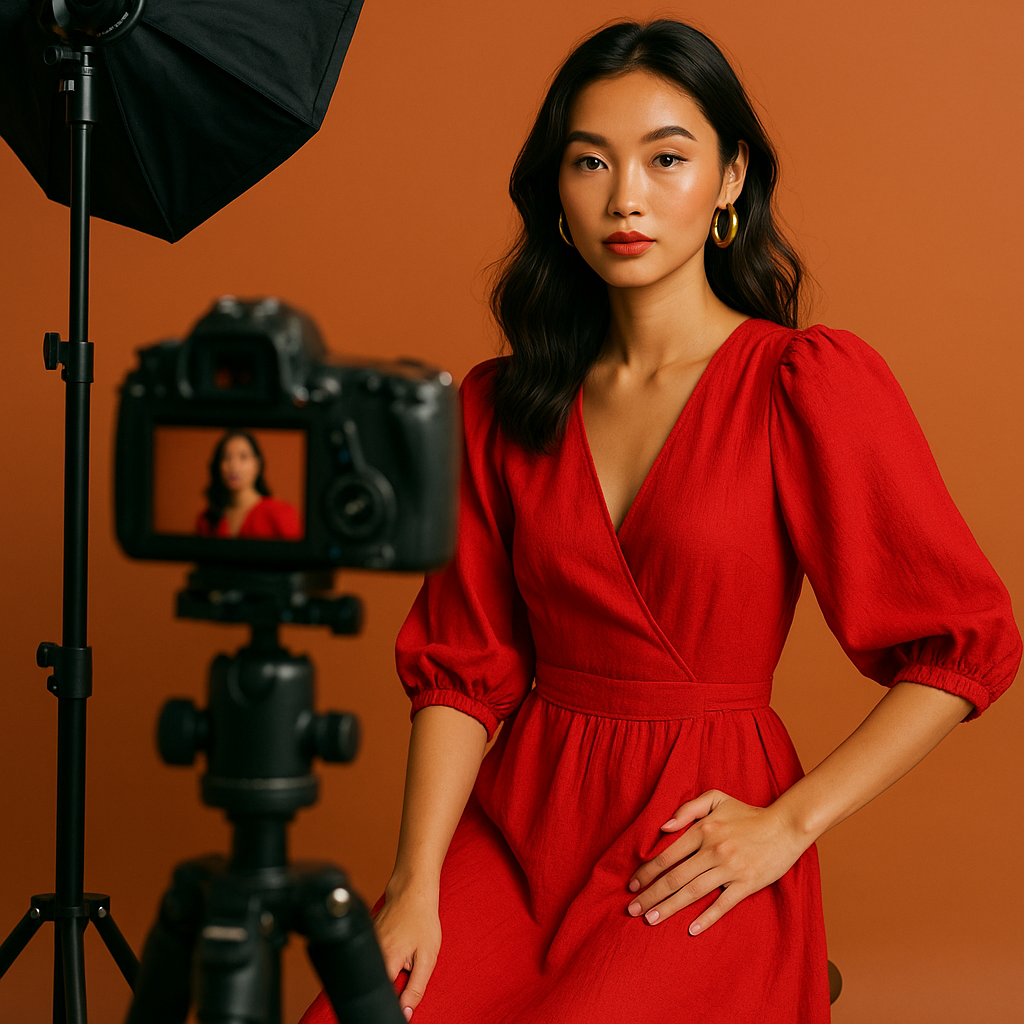
Understanding model loading fees in Singapore is essential before you finalise your fashion shoot production budget. Planning a commercial shoot involves far more than booking a talented model and securing a stunning Orchard Road location — underestimating loading fees can derail even the most carefully planned campaign. This comprehensive guide explains exactly what model loading fees in Singapore are, how they are calculated across media type, geography, and exclusivity, what they cost in 2024, and how to negotiate them effectively for your next shoot.

What Are Model Loading Fees and Why Do They Exist in Singapore?
Model loading fees exist because a model’s earning potential is directly tied to how widely and how long their image is used commercially. A model photographed for an in-store poster displayed in a single boutique carries far less commercial exposure than a model whose image appears across a regional e-commerce platform, out-of-home advertising in Malaysia and Indonesia, and a paid social media campaign targeting all of Southeast Asia.
The loading fee framework — widely adopted by modelling agencies in Singapore, including those aligned with the Singapore Fashion Council — compensates models fairly for that expanded commercial value. The concept is rooted in global standards championed by organisations including the Model Alliance in the United States and the British Fashion Council in the United Kingdom. Singapore agencies progressively adopted similar structures as local brands scaled into regional and global markets throughout the 2010s, accelerating further post-2020 with the rise of cross-border e-commerce on platforms such as Shopee, Lazada, and ZALORA.
According to a 2022 industry survey by Campaign Brief Asia, approximately 67% of Singapore-based advertising producers reported that usage and loading fee negotiations were the most complex element of talent contracting, surpassing location permits and post-production costs in both complexity and frequency of dispute.
How Model Loading Fees Are Calculated in Singapore
Model loading fees in Singapore are calculated using three primary variables: media type, geographic territory, and usage duration. Agencies apply percentage loadings to the base session fee for each variable, then combine them to produce a total loading percentage. Understanding how each variable works is fundamental to accurate budget forecasting.
1. Media Type Loading Percentages
Different media channels attract different loading percentages in Singapore because each channel carries different levels of commercial exposure and brand-building value. The following benchmarks reflect standard agency rates in Singapore as of 2024:
- Print editorial (magazine, newspaper): 20%–40% of session fee
- Digital and social media (organic): 20%–50% of session fee
- Digital and social media (paid advertising): 40%–80% of session fee
- E-commerce platform (Shopee, Lazada, ZALORA): 30%–60% of session fee
- Out-of-home advertising (OOH/DOOH): 50%–100% of session fee
- Television and broadcast: 80%–150% of session fee
- Cinema advertising: 60%–120% of session fee

2. Geographic Territory Loading Percentages
The broader the territory in which a model’s image is used, the higher the loading. Singapore agencies apply territory loadings on a tiered basis that typically follows this structure:
- Singapore only: Base loading (no additional territory surcharge)
- ASEAN region (up to 10 countries): +20%–40% added to media loading
- Asia-Pacific (including Japan, Australia, China): +40%–70% added to media loading
- Global/Worldwide: +60%–100% added to media loading
A campaign running across paid social media in ASEAN, for example, might attract a combined loading of 80%–120% of the session fee — the media loading of 40%–80% plus the ASEAN territory surcharge of 20%–40%.
3. Usage Duration Loading Percentages
Usage rights in Singapore are typically granted in blocks of 6 months, 12 months, or 24 months. Longer licensing periods attract proportionally higher loadings:
- Up to 6 months: Standard loading rate applies
- 6–12 months: +15%–25% uplift on standard loading
- 12–24 months: +30%–50% uplift on standard loading
- Perpetual/unlimited duration: +75%–125% uplift — rarely granted, negotiated case by case
2024 Model Loading Fee Cost Benchmarks for Singapore Fashion Shoots
The following worked examples illustrate real-world model loading fee scenarios for fashion shoots in Singapore in 2024. All calculations are based on a base session fee of SGD 2,000 (a mid-range day rate for an experienced Singapore-based commercial model).
Scenario A: Organic Instagram Campaign, Singapore Only, 6 Months
- Session fee: SGD 2,000
- Digital/social media organic loading: 30% = SGD 600
- Territory: Singapore only — no surcharge
- Duration: 6 months — standard rate applies
- Total model cost: SGD 2,600
Scenario B: Paid Social Media Campaign, ASEAN, 12 Months
- Session fee: SGD 2,000
- Paid digital/social loading: 60% = SGD 1,200
- ASEAN territory surcharge: 30% = SGD 600
- 12-month duration uplift: 20% = SGD 400
- Total model cost: SGD 4,200
Scenario C: Television Broadcast + OOH, Asia-Pacific, 12 Months
- Session fee: SGD 2,000
- Broadcast loading: 120% = SGD 2,400
- OOH loading: 75% = SGD 1,500
- Asia-Pacific territory surcharge: 55% = SGD 1,100
- 12-month duration uplift: 25% = SGD 500
- Total model cost: SGD 7,500
These benchmarks demonstrate why model loading fees in Singapore can represent 30% to 275% of the base session fee and must be accounted for early in production budgeting. A television and Asia-Pacific OOH campaign for a single model can add SGD 5,500 in loading fees on top of a SGD 2,000 session fee.

Exclusivity Loading Fees: An Often-Overlooked Cost in Singapore Fashion Shoots
Beyond media, territory, and duration, Singapore model agencies charge a separate exclusivity loading when a client requires the model not to work with competing brands during the contract period. This is particularly common in fashion, beauty, and luxury goods campaigns.
Key exclusivity considerations for Singapore fashion shoots include:
- Category exclusivity (e.g., no other fashion retail clients): 25%–50% per month of the session fee
- Full exclusivity (no commercial work of any kind): 50%–75% per month of the session fee
- Partial exclusivity (specific competitor brands named): 15%–30% per month of the session fee
- Exclusivity periods in Singapore typically run for 3, 6, or 12 months
- Most agencies cap exclusivity discussions at 12 months maximum for established models
A 6-month full exclusivity clause on a model with a SGD 2,000 session fee would add SGD 6,000 to SGD 9,000 in exclusivity loading alone — separate from all usage loadings. This cost surprises many Singapore fashion producers who budget only for session fees and basic usage.
Key Contract Terms Governing Model Loading Fees in Singapore
Singapore model agency contracts contain specific clauses that govern loading fees. Producers and brand managers must understand these terms before signing any talent agreement.
Usage Rights Clause
This clause defines precisely which media channels, territories, and durations are covered by the agreed loading fees. Any usage outside this scope — even inadvertent repurposing of content — can trigger additional loading fee invoices or legal action by the agency. Always ensure that your internal marketing team is briefed on usage scope restrictions.
Buyout vs. Licenced Usage
A buyout grants perpetual, unlimited usage rights across all media and territories for a single one-time fee, eliminating future loading fee negotiations. Buyouts in Singapore are expensive — typically 200%–400% of the session fee — but provide certainty for long-running campaigns. Most agencies in Singapore reserve buyout terms for new talent with limited market profile; established models rarely agree to full buyouts.
Rollover and Extension Clauses
These clauses allow a client to extend the usage period upon payment of an additional loading — typically 50%–75% of the original loading fee for a 6-month extension. Rollover rights must be negotiated upfront and written into the original contract; attempting to negotiate a rollover after the initial term expires gives the agency significant leverage.
Approval and Credit Clauses
Many Singapore model contracts include approval rights, giving the model or their agency the right to approve final image selections before publication. Failure to obtain approval can void usage rights and expose the client to compensation claims. Credit clauses — requiring the model to be named in editorial usage — are standard in Singapore magazine and press contexts.
How to Negotiate Model Loading Fees in Singapore
Effective negotiation of model loading fees in Singapore requires preparation, industry knowledge, and a clear understanding of what the agency prioritises. The following strategies are used by experienced Singapore producers to manage loading fee costs.
Strategy 1: Define Your Usage Scope Precisely Before Approaching the Agency
Agencies charge loadings based on the broadest possible interpretation of vague usage briefs. If you approach an agency saying you need images for “digital marketing,” expect them to quote paid social, programmatic advertising, and e-commerce simultaneously. Instead, specify exact channels (e.g., organic Instagram and Facebook, Singapore only) to anchor negotiations to the lowest justifiable loading tier.
Strategy 2: Negotiate Loading Caps
Many Singapore agencies will agree to a loading cap — a maximum total loading percentage regardless of how many usage categories are stacked. Producers who shoot campaigns across multiple media channels often negotiate caps of 150%–200% of the session fee, preventing loadings from escalating unboundedly when three or four media types are combined.
Strategy 3: Use Phased Territory Expansion
Rather than paying for ASEAN or Asia-Pacific territory rights upfront, negotiate Singapore-only rights initially with a right of first refusal on additional territories at pre-agreed loading rates. This preserves budget flexibility and avoids paying for geographic reach you may never use.
Strategy 4: Offer Longer Shoot Days in Exchange for Reduced Loadings
Some Singapore agencies are willing to reduce loading percentages if the client commits to a longer shoot day (e.g., 10 hours instead of 8), increasing the base session fee. Because loading percentages apply to the session fee, this can reduce effective loading costs while increasing the model’s total earnings — creating a win-win structure.
Strategy 5: Work with a Local Production Company Experienced in Talent Negotiation
Singapore-based production companies with established agency relationships can negotiate loading fees more effectively than brand-side teams approaching agencies directly. Their relationships, knowledge of standard rates, and understanding of agency priorities typically result in 10%–25% lower total talent costs compared to direct brand negotiations, according to industry practitioners surveyed by Mumbrella Asia in 2023.

Common Mistakes Brands Make with Model Loading Fees in Singapore
Based on patterns observed across Singapore’s fashion and advertising production industry, the following mistakes recur consistently and are entirely avoidable with proper planning.
Mistake 1: Budgeting Only for the Session Fee
The most common and costly error. Brands new to Singapore fashion production assume the session fee is the total model cost. For any campaign with regional distribution or paid digital spend, loading fees will typically double or triple the total model line item.
Mistake 2: Repurposing Content Beyond Licensed Scope
When a campaign performs well, marketing teams naturally want to extend its run or repurpose assets across new channels. Using licensed model images beyond the agreed scope — even internally — creates legal exposure and typically results in retrospective loading invoices that are far more expensive than proactive negotiation would have been.
Mistake 3: Ignoring Rollover Rights at Signing
Failing to include rollover rights in the original contract leaves brands exposed to full renegotiation when campaign extensions are needed. At that point, the agency holds all the leverage.
Mistake 4: Conflating Photographer Licensing with Model Loading Fees
Photographer image licensing fees are separate from model loading fees and are governed by different contracts. Both apply simultaneously to a fashion shoot in Singapore. Brands frequently budget only for one, creating significant unplanned costs when the photographer’s licensing invoice arrives alongside the agency’s loading fee invoice.
Model Loading Fees vs. Influencer Fees in Singapore: Key Differences
As Singapore fashion brands increasingly blend traditional model shoots with influencer content creation, understanding the fee structure differences is critical.
- Traditional models (agency-represented): Session fee + structured loading fees based on media, territory, duration. Rights formally documented in agency contract.
- Influencers (self-represented or via MCN): Flat content creation fee + separate usage fee if content is repurposed beyond the influencer’s own channels. Loading structures are less standardised and must be explicitly negotiated.
- Hybrid model-influencers: Represented by both modelling agencies and influencer management companies. Both sets of fee structures may apply, creating complex dual-contract scenarios.
Singapore brands running integrated campaigns using both traditional models and influencers should budget separately for each talent category and ensure usage rights are documented identically to prevent gaps in licensed coverage.
Singapore Industry Bodies and Resources on Model Loading Fees
Several organisations provide guidance on model loading fees and talent contracting standards in Singapore:
- Singapore Fashion Council (SFC): Provides industry benchmarking and connects brands with accredited agencies that adhere to transparent loading fee structures.
- Association of Accredited Advertising Agents Singapore (4As): Publishes recommended talent usage guidelines for advertising campaigns produced in Singapore.
- ACRA (Accounting and Corporate Regulatory Authority): Relevant for understanding contractual obligations and dispute resolution frameworks for talent contracts governed under Singapore law.
- Asia Pacific Performers Alliance: Advocates for fair compensation structures including loading fees for models and performers across Southeast Asian markets.
Frequently Asked Questions: Model Loading Fees in Singapore
Are model loading fees in Singapore legally required?
Loading fees are not mandated by Singapore law but are a contractual industry standard enforced through agency talent agreements. Brands that circumvent loading fee structures by working directly with unrepresented models assume significant legal and reputational risk if disputes arise over image rights.
Do loading fees apply to behind-the-scenes content from fashion shoots?
Yes. Behind-the-scenes content used commercially — including Instagram Stories, YouTube campaign making-of videos, and press releases — typically attracts digital and social media loading fees in Singapore. Some agencies include BTS content under a reduced flat loading; clarify this in pre-production.
Can a model refuse a loading fee extension request?
Yes. If rollover rights were not included in the original contract, a model or their agency can decline to extend usage rights entirely, or can negotiate substantially higher loading fees for the extension period. This is a recognised negotiating position under Singapore contract law.
What currency are model loading fees invoiced in Singapore?
Model loading fees in Singapore are almost universally invoiced in Singapore Dollars (SGD). International brands shooting in Singapore should account for currency conversion costs when loading fees represent a significant budget line.
Conclusion: Budget for Model Loading Fees in Singapore from Day One
Model loading fees in Singapore are not a footnote in your fashion shoot budget — they are a core line item that can represent 30% to 275% of your base model costs depending on media type, territory, and duration. The brands and production teams that navigate loading fees most effectively are those that define usage scope precisely before approaching agencies, negotiate loading caps and rollover rights proactively, and work with experienced local production partners who understand Singapore’s talent contracting landscape.
Whether you are planning an organic social campaign for a single Singapore market or a multi-channel, Asia-Pacific broadcast and OOH campaign, building loading fees into your budget from the earliest planning stage will prevent the cost surprises that derail fashion shoot productions. Use the benchmarks, worked examples, and negotiation strategies in this guide to approach your next Singapore fashion shoot with clarity and confidence.