

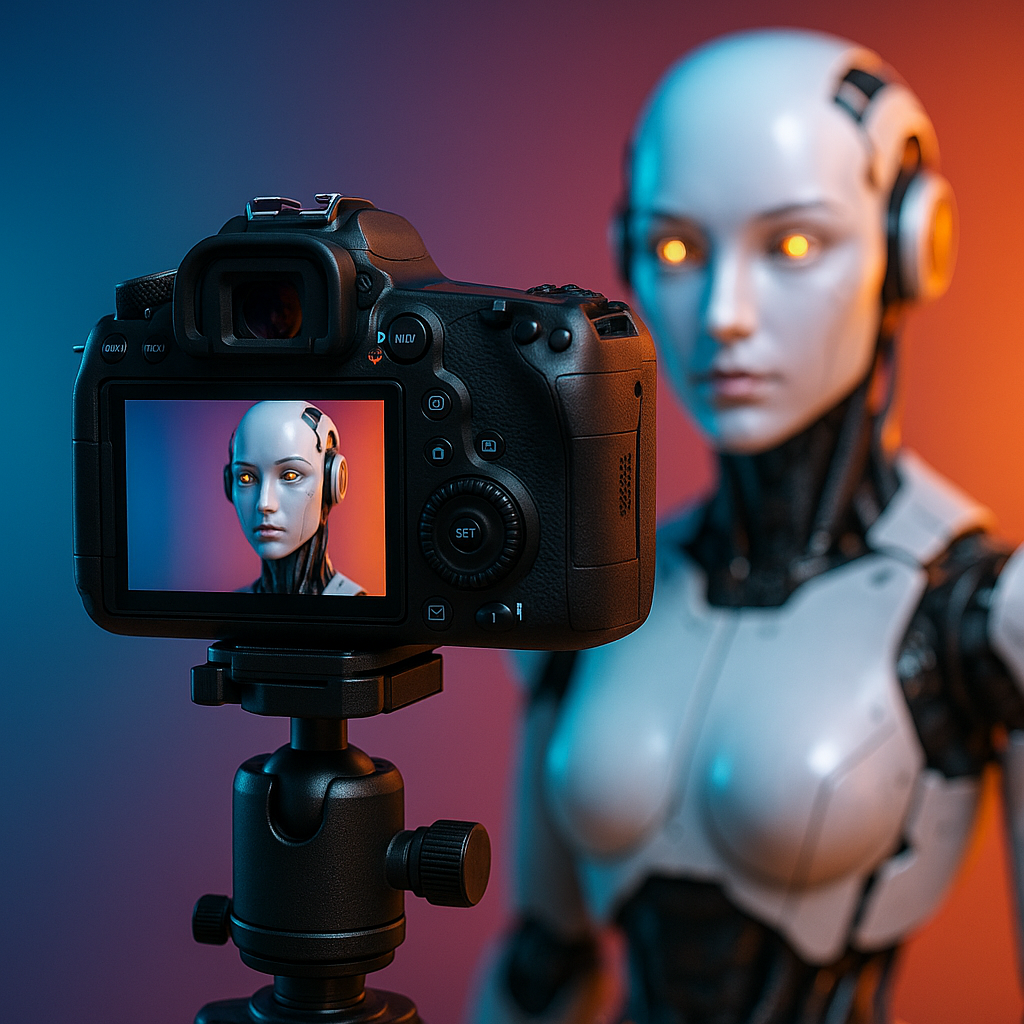
Artificial intelligence is no longer a distant promise for visual creatives — it is actively reshaping the way brands, agencies, and independent photographers produce commercial imagery. At the centre of this revolution sits product photography, a discipline that has traditionally demanded significant budget, studio space, and skilled labour. Today, AI-powered platforms are compressing timelines from weeks to hours, reducing costs by as much as 60%, and opening creative possibilities that were previously inaccessible to small and mid-market brands. Understanding where this technology is heading is no longer optional for anyone working in commercial visual media.
AI photography is transforming product photography by automating background generation, lighting simulation, and even the creation of photorealistic synthetic models — eliminating the need for traditional studio shoots in many use cases. Tools such as Adobe Firefly, Stability AI, and Pebblely now allow brands to produce publication-ready product imagery at a fraction of conventional costs. Research indicates that AI-generated product visuals can reduce time-to-market for e-commerce listings by up to 70%, making AI adoption a strategic imperative rather than a creative experiment.

How AI Is Redefining Product Photography Workflows
The most immediate and measurable impact of AI on product photography is the radical compression of production workflows. Traditionally, a single e-commerce shoot — involving prop styling, lighting setup, model coordination, and post-production — could take two to five days and cost anywhere from £1,500 to £10,000 per day of studio time. AI platforms such as Pebblely, Photoroom, and Adobe Firefly have introduced generative background replacement, one-click lighting correction, and automated shadow synthesis, collapsing much of that process into minutes.
Automated Background Generation and Scene Synthesis
Scene synthesis tools now allow a photographer — or even a non-photographer — to place a product against hundreds of contextually appropriate backgrounds using text prompts alone. A skincare brand, for instance, can generate a product shot surrounded by botanical elements, marble surfaces, or coastal settings without leaving the office. According to a 2024 industry survey by Practical Ecommerce, 58% of mid-market e-commerce brands reported using AI background generation tools at least once per quarter, a figure that had more than doubled from the previous year.
Lighting and Shadow Intelligence
One of the most technically challenging aspects of product photography has always been lighting consistency. AI systems trained on millions of studio images can now predict and replicate natural and artificial light behaviour with startling accuracy. Tools like Luminar Neo and Photoroom Pro deploy neural relighting models that analyse the surface properties of a product — reflectivity, texture, translucency — and apply studio-grade lighting profiles automatically. Studies suggest that photographers using AI relighting tools save an average of 3.2 hours per product shoot in post-production alone.
AI Fashion Photography: The Rise of Synthetic Models and Virtual Runways
Fashion photography is arguably the category most aggressively disrupted by generative AI, with synthetic model technology moving from novelty to mainstream production tool in fewer than three years. The key development in AI fashion photography is the emergence of photorealistic digital humans that can be dressed in physical or virtual garments, posed, lit, and styled entirely within software environments.
Digital Humans and Synthetic Runway Models
Platforms such as Lalaland.ai and Datagrid have pioneered the creation of diverse, fully synthetic models that fashion brands can licence for lookbook shoots, e-commerce listings, and campaign imagery. H&M attracted significant industry attention in 2023 when it announced a partnership to create AI versions of real models, sparking a broader conversation about consent, representation, and creative labour. Research from McKinsey & Company indicates that fashion brands adopting AI model imagery for e-commerce can reduce sample production and shoot costs by up to 40%, a compelling financial argument in a sector where margins are perennially under pressure.

Virtual Try-On and Augmented Reality Integration
Beyond static imagery, AI fashion photography is converging with augmented reality to produce interactive product photography experiences. Snap Inc.‘s AR shopping lenses and Zalando‘s virtual fitting room technology use computer vision to superimpose garments onto a user’s live camera feed, effectively turning every smartphone into a fitting room. This is not a future concept — studies suggest that virtual try-on features increase conversion rates by an average of 30% on fashion e-commerce platforms, making them a critical investment priority for 2025 and beyond.
The Impact of AI on Model Photography and Ethical Considerations
Model photography — the practice of photographing human subjects to sell products, tell brand stories, or create editorial content — sits at a complex intersection of technology, ethics, and regulation as AI capabilities advance. The core tension is clear: AI offers brands unprecedented flexibility and cost efficiency in model imagery, while simultaneously raising legitimate questions about job displacement, consent, and the perpetuation of beauty standards through algorithmic bias.
Regulatory and Industry Responses
Regulatory frameworks are beginning to catch up with the technology. The European Union’s AI Act, which entered force in 2024, includes provisions requiring transparency when AI-generated imagery is used in commercial contexts, including product photography. In the United States, the Screen Actors Guild (SAG-AFTRA) has negotiated AI clauses into commercial production agreements, establishing baseline protections for models whose likenesses may be used to train or generate AI imagery. Industry bodies including the British Fashion Council have issued voluntary guidelines recommending explicit disclosure when synthetic models appear in fashion campaigns.
Bias, Diversity, and Representation
AI model generators trained on historically non-diverse datasets risk compounding existing representation problems in fashion and product photography. A 2023 audit by MIT Media Lab found that leading image generation models produced images skewing toward lighter skin tones and Western body types in more than 70% of fashion-related prompts when no demographic specifications were provided. Addressing this requires deliberate dataset curation, bias auditing, and inclusive prompt engineering — disciplines that are rapidly professionalising within AI creative teams.