

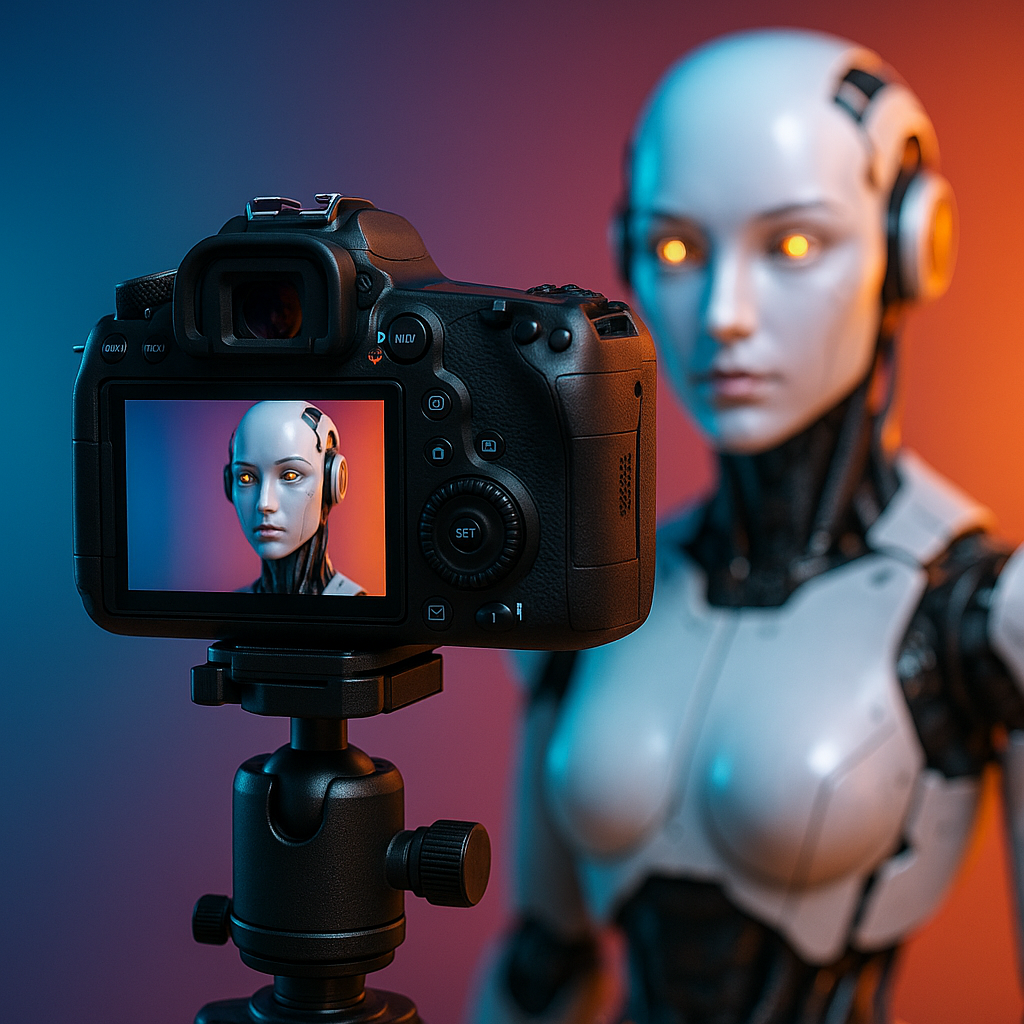
Artificial intelligence is no longer a distant promise for visual creatives — it is actively reshaping the way brands, agencies, and independent photographers produce commercial imagery. At the centre of this revolution sits product photography, a discipline that has traditionally demanded significant budget, studio space, and skilled labour. Today, AI-powered platforms are compressing timelines from weeks to hours, reducing costs by as much as 60%, and opening creative possibilities that were previously inaccessible to small and mid-market brands. Understanding where this technology is heading is no longer optional for anyone working in commercial visual media.
AI photography is transforming product photography by automating background generation, lighting simulation, and even the creation of photorealistic synthetic models — eliminating the need for traditional studio shoots in many use cases. Tools such as Adobe Firefly, Stability AI, and Pebblely now allow brands to produce publication-ready product imagery at a fraction of conventional costs. Research indicates that AI-generated product visuals can reduce time-to-market for e-commerce listings by up to 70%, making AI adoption a strategic imperative rather than a creative experiment.

How AI Is Redefining Product Photography Workflows
The most immediate and measurable impact of AI on product photography is the radical compression of production workflows. Traditionally, a single e-commerce shoot — involving prop styling, lighting setup, model coordination, and post-production — could take two to five days and cost anywhere from £1,500 to £10,000 per day of studio time. AI platforms such as Pebblely, Photoroom, and Adobe Firefly have introduced generative background replacement, one-click lighting correction, and automated shadow synthesis, collapsing much of that process into minutes.
Automated Background Generation and Scene Synthesis
Scene synthesis tools now allow a photographer — or even a non-photographer — to place a product against hundreds of contextually appropriate backgrounds using text prompts alone. A skincare brand, for instance, can generate a product shot surrounded by botanical elements, marble surfaces, or coastal settings without leaving the office. According to a 2024 industry survey by Practical Ecommerce, 58% of mid-market e-commerce brands reported using AI background generation tools at least once per quarter, a figure that had more than doubled from the previous year.
Lighting and Shadow Intelligence
One of the most technically challenging aspects of product photography has always been lighting consistency. AI systems trained on millions of studio images can now predict and replicate natural and artificial light behaviour with startling accuracy. Tools like Luminar Neo and Photoroom Pro deploy neural relighting models that analyse the surface properties of a product — reflectivity, texture, translucency — and apply studio-grade lighting profiles automatically. Studies suggest that photographers using AI relighting tools save an average of 3.2 hours per product shoot in post-production alone.
AI Fashion Photography: The Rise of Synthetic Models and Virtual Runways
Fashion photography is arguably the category most aggressively disrupted by generative AI, with synthetic model technology moving from novelty to mainstream production tool in fewer than three years. The key development in AI fashion photography is the emergence of photorealistic digital humans that can be dressed in physical or virtual garments, posed, lit, and styled entirely within software environments.
Digital Humans and Synthetic Runway Models
Platforms such as Lalaland.ai and Datagrid have pioneered the creation of diverse, fully synthetic models that fashion brands can licence for lookbook shoots, e-commerce listings, and campaign imagery. H&M attracted significant industry attention in 2023 when it announced a partnership to create AI versions of real models, sparking a broader conversation about consent, representation, and creative labour. Research from McKinsey & Company indicates that fashion brands adopting AI model imagery for e-commerce can reduce sample production and shoot costs by up to 40%, a compelling financial argument in a sector where margins are perennially under pressure.

Virtual Try-On and Augmented Reality Integration
Beyond static imagery, AI fashion photography is converging with augmented reality to produce interactive product photography experiences. Snap Inc.‘s AR shopping lenses and Zalando‘s virtual fitting room technology use computer vision to superimpose garments onto a user’s live camera feed, effectively turning every smartphone into a fitting room. This is not a future concept — studies suggest that virtual try-on features increase conversion rates by an average of 30% on fashion e-commerce platforms, making them a critical investment priority for 2025 and beyond.
The Impact of AI on Model Photography and Ethical Considerations
Model photography — the practice of photographing human subjects to sell products, tell brand stories, or create editorial content — sits at a complex intersection of technology, ethics, and regulation as AI capabilities advance. The core tension is clear: AI offers brands unprecedented flexibility and cost efficiency in model imagery, while simultaneously raising legitimate questions about job displacement, consent, and the perpetuation of beauty standards through algorithmic bias.
Regulatory and Industry Responses
Regulatory frameworks are beginning to catch up with the technology. The European Union’s AI Act, which entered force in 2024, includes provisions requiring transparency when AI-generated imagery is used in commercial contexts, including product photography. In the United States, the Screen Actors Guild (SAG-AFTRA) has negotiated AI clauses into commercial production agreements, establishing baseline protections for models whose likenesses may be used to train or generate AI imagery. Industry bodies including the British Fashion Council have issued voluntary guidelines recommending explicit disclosure when synthetic models appear in fashion campaigns.
Bias, Diversity, and Representation
AI model generators trained on historically non-diverse datasets risk compounding existing representation problems in fashion and product photography. A 2023 audit by MIT Media Lab found that leading image generation models produced images skewing toward lighter skin tones and Western body types in more than 70% of fashion-related prompts when no demographic specifications were provided. Addressing this requires deliberate dataset curation, bias auditing, and inclusive prompt engineering — disciplines that are rapidly professionalising within AI creative teams.

Key AI Tools Transforming Product Photography in 2025
The ecosystem of AI photography tools has matured rapidly, and selecting the right platform for a given production context is now a core strategic competency for creative directors and e-commerce managers alike. The following tools represent the current state of the art across different segments of the product photography workflow.
Generative and Background Tools
Adobe Firefly leads the enterprise segment with its commercially safe generative AI, trained exclusively on licensed and public domain imagery — a critical differentiator for brands concerned about intellectual property liability. Pebblely and Photoroom target SME e-commerce operators with low-cost, high-speed background generation specifically optimised for product photography on white or transparent backgrounds. Stability AI’s open-source Stable Diffusion models underpin many white-label solutions used by larger agencies and technology platforms.
End-to-End AI Photography Platforms
A new category of end-to-end AI photography platforms is emerging that handles the entire production pipeline — from initial product ingestion and 3D modelling through to final, retouched imagery — without a single shutter click. Ablo and Botika are notable examples in the fashion segment, enabling brands to upload flat-lay product images and receive lifestyle photography featuring synthetic models within hours. For high-volume product photography, platforms like Packshot Creator now integrate AI-powered quality control, automatically flagging inconsistent lighting or unwanted reflections across large image batches.
What Human Photographers Bring That AI Cannot (Yet) Replace
Despite the extraordinary pace of AI advancement, professional photographers retain irreplaceable advantages in specific production contexts. Spontaneous creative direction, the ability to respond to unexpected moments, nuanced client relationship management, and the instinctive eye for a culturally resonant image remain distinctly human competencies. Research from the Professional Photographers of America (PPA) indicates that 67% of enterprise brand managers still prefer human-led shoots for hero campaign imagery, reserving AI tools primarily for secondary content, variant generation, and localisation assets.
The most successful photographers in the AI era are not resisting the technology — they are leveraging it. By using AI to handle repetitive post-production tasks such as background clean-up, skin retouching, and product shadow creation, skilled practitioners are freeing their time for higher-value creative work. This hybrid model — human creativity amplified by AI efficiency — is rapidly becoming the industry standard for professional product photography studios.

Conclusion: Embracing the AI-Powered Future of Product Photography
The transformation of product photography by artificial intelligence is not a future scenario — it is the present reality, accelerating with each model generation. From automated scene synthesis and AI-powered fashion photography to synthetic model imagery governed by emerging regulation, the entire visual content supply chain is being restructured. Brands and photographers who build AI literacy now — understanding both the capabilities and the ethical boundaries of these tools — will hold a decisive competitive advantage in the years ahead.
Whether you are an e-commerce director seeking to scale your image output, a fashion brand exploring synthetic runway photography, or a professional photographer looking to future-proof your practice, the imperative is the same: engage with AI photography tools deliberately, critically, and creatively. The technology is ready. The question is whether your strategy is.
Ready to future-proof your visual content strategy? Explore our in-depth guides to AI photography tools, synthetic model platforms, and e-commerce image optimisation — and start building your AI-powered photography workflow today.
Frequently Asked Questions
Can AI completely replace traditional product photography studios?
AI cannot fully replace traditional product photography studios in all contexts, but it is capable of handling a significant and growing proportion of commercial image production — particularly for e-commerce variant imagery, background generation, and secondary campaign assets. For hero imagery, luxury brand photography, and campaigns requiring authentic human narrative, human-led studios remain the preferred choice for the majority of enterprise brand managers. The most effective model in 2025 is a hybrid approach, where AI tools augment studio efficiency rather than replace creative professionals entirely.
What are the best AI tools for product photography in 2025?
The leading AI tools for product photography in 2025 include Adobe Firefly for enterprise-grade, IP-safe generative imagery; Photoroom and Pebblely for fast, SME-oriented background removal and generation; Luminar Neo for AI-powered lighting and retouching; and Botika or Ablo for end-to-end AI fashion photography with synthetic models. The right tool depends on your production volume, budget, and whether your primary need is background generation, model imagery, or full pipeline automation.
Is AI-generated model photography legal and ethical to use in advertising?
AI-generated model photography occupies a rapidly evolving legal and ethical landscape. In the European Union, the AI Act requires transparency disclosures when synthetic imagery is used commercially. In the US, SAG-AFTRA agreements now include AI protections for models. Ethically, brands are advised to disclose the use of synthetic models in campaigns, ensure their AI tools are trained on diverse and consented datasets, and avoid using AI to replicate the likeness of real individuals without explicit permission. Consulting legal counsel familiar with AI and advertising law is strongly recommended before deploying synthetic model imagery at scale.
How does AI improve the quality of product photography for e-commerce?
AI improves e-commerce product photography quality in several measurable ways: it ensures background consistency across large image catalogues, applies physics-accurate lighting and shadow effects that would require expensive studio setups to replicate manually, automates quality control checks for colour accuracy and unwanted reflections, and enables rapid generation of lifestyle context images from simple flat-lay inputs. Research indicates that AI-enhanced product imagery can increase e-commerce conversion rates by 20–35% compared to basic white-background images, making AI investment directly attributable to revenue performance.